

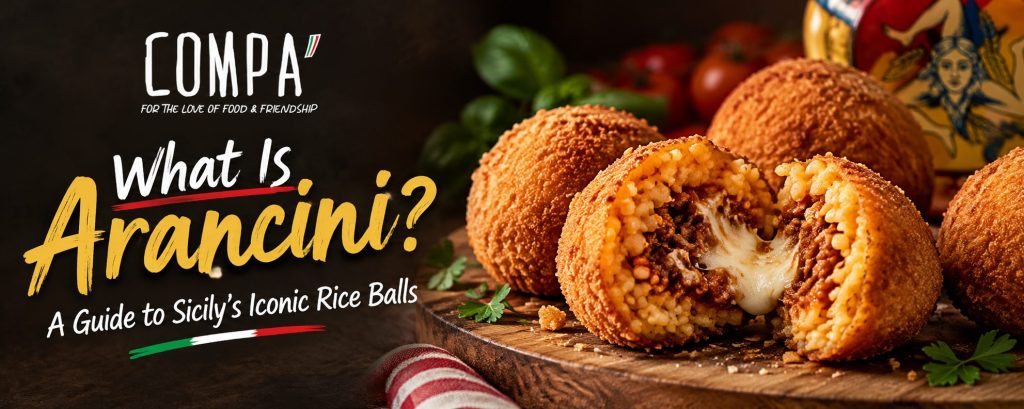
If you’ve ever wondered what arancini are, the short answer is this: they’re Sicily’s iconic stuffed, crumbed and deep-fried rice balls, built from cooked rice shaped around a savoury filling, rolled in breadcrumbs and fried until the outside turns crisp and golden.
The classic filling is often ragù with peas and cheese, though recipes vary, and while most people call them arancini balls because the traditional version is round, in some parts of Sicily they’re shaped like a cone.
For anyone curious about Sicilian food, keen to understand traditional and modern arancini varieties, planning to make them at home, or trying to order authentic arancini in Perth, this guide covers the essentials: what goes into them, where they came from, the fillings worth trying, how they’re prepared and served, the regional naming differences, and what to look for when you order them in Perth.
Arancini have lasted for good reason: they turn simple ingredients into one of Sicily’s most satisfying foods and carry a strong sense of culinary history from street stalls to local menus today. If you’d rather skip ahead and eat some, you can see what’s on at Compà Mt Hawthorn.
What Is Arancini Rice Balls?
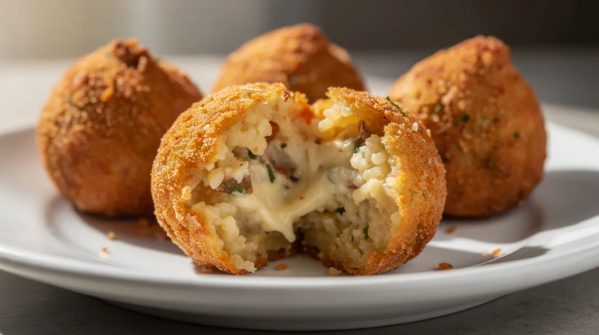
Arancini are stuffed, crumbed and deep-fried rice specialities from Sicily, and a popular finger food there. The rice forms the shell, a savoury filling sits in the middle, and the breadcrumb coating turns crunchy in the fryer while the centre stays soft and warm. The traditional filling is ragù, peas and cheese.
In Sicily you’ll find them in bakeries, fry shops and market stalls, usually handed over in a square of paper and eaten standing up. Plenty of locals have one for breakfast or a quick midday bite.
A traditional arancino weighs around 200 grams, so one is often enough for a meal. They’re also a good example of how Italian street food can be simple and deeply satisfying at the same time.
Why Are They Called Arancini?
The name means “little oranges” in Italian, from the word arancia. Early versions looked like small oranges, both in shape and in that deep golden colour.
Sicily can’t agree on the name or the shape, which is part of the fun:
- Eastern Sicily (Catania, Messina): people say arancino, and the shape is often conical, said to echo Mount Etna.
- Western Sicily (Palermo, Trapani): people say arancina, and the shape is round like an orange.
The Accademia della Crusca recognises both forms as correct regional usage, so neither side is wrong.
What Is Arancini Made Of?
Every arancino has three parts: the rice, the filling and the coating, and this basic structure underpins a classic arancini recipe.
| Part | Common ingredients | Job it does |
| Rice | Short grain rice, stock, saffron in some versions | Forms the outer shell |
| Filling | Ragù, cheese, ham, vegetables | Adds flavour and texture |
| Coating | Flour, beaten eggs and breadcrumbs | Creates the crisp exterior |
| Cooking | Hot vegetable or olive oil used as hot oil | Browns and crisps the coating |
The rice mixture is shaped around the filling before coating.
The rice
Arborio is the standard choice. Its high starch content helps the grains hold together, but for arancini you want them tender and cohesive rather than a creamy texture. Long-grain rice tends to fall apart. Traditional Sicilian versions cook the rice in chicken broth with saffron, which gives it a yellow tint and a subtle floral taste.
The filling
The classic arancini filling is a slow-cooked savoury mixture, often a beef or pork ragù simmered with tomato and peas, seasoned with salt and pepper, plus a cube of fresh mozzarella or caciocavallo that melts into long, stretchy strings when you break the arancino open. Ham with béchamel, vegetables, and ricotta with mint are also traditional, and some versions are served with tomato sauce.
The coating
Three layers do the work: flour, lightly beaten egg (sometimes with extra egg white), then fine breadcrumbs. Together they make a shell that survives the fryer and gives each bite its crunch, with the coating helping the crumbs adhere evenly before frying.
Where Did Arancini Come From?
Arancini go back to 10th-century Sicily, during Arab rule (827 to 1091 AD). Arab settlers brought rice, saffron and citrus to the island, and those three ingredients are still the foundation of the dish. Over the centuries, Arabic, Norman and Mediterranean influences blended into the Sicilian cooking we know today.
The earliest written mention of arancinu shows up in an 1857 Sicilian-Italian dictionary, although that entry described a sweet rice shape, not the savoury one. The version with ragù and cheese appears in Italian literature by the 1890s.
Arancini also have a place in Sicilian tradition. On the Feast of Saint Lucia on 13 December, Sicilians traditionally skip bread and pasta, and arancini fill the gap. Estimates put the number eaten across the island that day at around three million.
Arancino or Arancina:
It comes down to regional dialect. Eastern Sicily uses the masculine arancino, from the Sicilian aranciu (bitter orange). Western Sicily uses the feminine arancina, from the standard Italian arancia. Neither form is incorrect, and the shape usually follows the name: cones in the east, spheres in the west.
What Are the Different Types of Arancini?
Traditional meat-filled
This is what most Sicilians mean when they just say “arancini”: traditional arancini, often called arancino al ragù, is filled with meat sauce and peas, with cubes of caciocavallo or mozzarella that melt as it cooks.
Cheese and béchamel
Known as arancine al burro, these swap the ragù for creamy béchamel with diced ham and soft cheese. The centre is smoother and richer, without the chunky tomato base of the meat version.
Vegetarian
Fillings include cheese, spinach, mushrooms or eggplant. Arancini alla Norma uses eggplant as a nod to the Sicilian pasta dish of the same name, and some recipes lean on Parmesan cheese for extra savoury depth, working grated Parmesan cheese or pecorino romano into the rice. If you’re after a meat-free option, a simple tomato and cheese arancino is a good place to start.
Modern takes
Contemporary kitchens have pushed the format well beyond tradition. You’ll see pistachio, seafood, smoked salmon and pesto versions. Sicily even has a sweet one, filled with chocolate or sweet ricotta and served as dessert. These newer styles now sit on Italian menus around the world next to the classics.
How Is Sicilian Arancini Recipe Made?
A standard Sicilian arancini recipe has five stages. It isn’t difficult, but it rewards patience.
- Prepare the rice. Cook Arborio rice in chicken or vegetable stock with saffron over medium heat, stirring frequently with a wooden spoon until the liquid is absorbed; the cooking time matters because the grains should stay al dente enough to shape. Spread it on a tray and let it cool for at least one to two hours. Chilled rice firms up and is much easier to shape. Some cooks stir in grated cheese and egg at this stage to help it bind.
- Make the filling. Prepare the arancini filling separately. For a traditional ragù, simmer finely chopped onion and minced beef with tomato paste or passata and peas over medium heat until thick. Cut your cheese into small cubes, and let everything cool completely before you start shaping.
- Shape. Take a portion of rice slightly larger than a golf ball, flatten it in your palm and press a small well into the centre. Add a spoonful of filling and a cube of cheese, then close the rice around it and form a ball or cone when shaping the arancini rice balls. Keep a bowl of water nearby to stop the rice sticking to your hands, and pack it firmly to avoid air pockets.
- Coat. Roll each one in flour; some cooks then use beaten eggs before pressing them into breadcrumbs until fully covered. Any gap in the coating can make the arancino burst while frying. If you plan to bake instead, chill them for 20 minutes first so they hold their shape.
- Fry. Heat a neutral oil, such as vegetable oil, in a deep fryer or heavy pot to about 180°C (350°F). Fry in batches for 3 to 4 minutes, turning once, until deep golden brown. Lift them out with a slotted spoon and drain well on a paper towel lined plate to remove excess oil.
Baking or air frying
Deep frying is traditional, but there are lighter options. To bake, brush arancini with olive oil and cook on a lined baking tray for about 20 minutes at 200°C (390°F). To air fry, or use an oven or air fryer, arrange them in a single layer and cook until deep golden, turning halfway through, as air frying arancini is a less oily alternative to frying. Either way, you’re after a crisp outside and a hot, soft centre. Baked and air-fried arancini can be set on a baking sheet while you prepare or cool batches.
Arancini vs Risotto: What’s the Difference?
Risotto is a creamy rice dish served straight from the pan. The rice is stirred constantly with stock until it turns loose and saucy, and you eat it with a spoon. Arancini are shaped, filled and fried portions of rice that you eat with your hands.
Plenty of people assume arancini are made from leftover risotto. That works as a shortcut at home, but traditional Sicilian preparation cooks the rice specifically for shaping. The two dishes share an ingredient, and not much else in texture or setting. “Risotto balls” is a casual nickname you’ll hear outside Italy, but Sicilians wouldn’t use it.
How Are Arancini Traditionally Served?
In Sicily they’re sold warm from bakeries and fry shops. At the table they work as a shared starter, a snack between meals, or a portable lunch, and they’re often served as finger food at parties or casual gatherings.
Golf-ball-sized ones suit sharing platters and party spreads, while larger ones, especially the conical Catanian style, are a meal by themselves. Serve them with a simple salad, or with tomato passata or a marinara dipping sauce.
Leftovers are easy to handle:
- Freezing: you can freeze arancini before or after cooking, in an airtight container or freezer bag, for up to two months. Reheat from frozen and allow a few extra minutes.
- Reheating: use the oven at 180°C (350°F) for about 10 minutes, or the air fryer. Fried arancini reheat best this way to restore the crust. Skip the microwave, which turns the coating soggy.
What Should You Look for When Ordering Arancini in Perth?
Start with the filling. A classic ragù version gives you the full Sicilian experience, while a tomato and cheese or spinach and mozzarella option is lighter.
Check the texture. A well-made arancino has a crisp, non-greasy crust, a cohesive rice shell that doesn’t crumble, and a warm, flavourful centre with a good balance of rice to filling. If it feels heavy with oil, or the rice is dry and grainy, the kitchen has some work to do.
Look at the rest of the menu. Arancini sit naturally alongside other Italian dishes, so see whether they’re made in-house and what they’re served with. Good Italian food is in the details: balanced seasoning, properly melted cheese, an evenly golden brown coating. Arancini tell you a lot about how a kitchen treats its ingredients. If you’re also comparing venues, our guide to what to expect from an Italian family restaurant in Mount Hawthorn covers what we aim for in the dining room.
Why Are Fried Arancini More Than Just Fried Rice Balls?
Because every bite carries centuries of Sicilian heritage, from the saffron-tinted rice to the crisp breadcrumb shell.
They come in regional shapes, dozens of fillings and both traditional and modern styles. That contrast between a crunchy exterior and a soft, savoury centre is what has kept this street food popular across continents and generations.
Whether it comes from a Palermo fry shop or a Perth restaurant, a good arancino links you to a food tradition that’s been refined for a very long time.
Try Arancini at Compà Mt Hawthorn
If you’re in Perth and want to taste arancini done properly, Compà Mt Hawthorn serves Tomato and Cheese Arancini (V), three pieces to a serve. They’re on the current menu, where you’ll also find handmade pasta, tapas and pinsa that pair well with them. Order a few dishes to share and make a proper meal of it.
You’ll find us at 406 Oxford St, Mount Hawthorn WA. Book a table online, call 08 9444 1686, or email info@compa.com.au. For larger groups or celebrations, see our functions and group bookings page, and for anything else, get in touch.