

If you have seen pinsa on an Italian menu and wondered what it actually is, you are not alone. Pinsa romana looks a little like pizza at first glance, but one bite tells you it is something else.
The base is soft and open in the centre, crisp around the edges, and shaped into an oval rather than a circle. So what is pinsa, really, and how does it differ from the pizza you already know?
This article explains what pinsa romana is, where it truly came from, what makes the dough so different, and how pinsa bianca compares with pinsa rossa.
What Is Pinsa Romana?
Pinsa romana is an Italian flatbread made from a blend of flours. It is related to pizza, but it is made using a very different process from start to finish.
The word pinsa comes from the Latin word pinsere, meaning to press or stretch, which is exactly how the dough is shaped. Instead of being tossed into a circle, it is pressed by hand into an oval.
Pinsa is usually pronounced peen sah. Once you try it, the name is easy to remember, because the texture is so different from anything else on an Italian menu. The base comes out crisp on the outside and soft and airy on the inside.
Where Did Pinsa Actually Come From?
Most menus describe pinsa as an ancient Roman recipe, but the real story is a little different, and honestly a lot more interesting.
Modern pinsa is generally credited to a Roman baker named Corrado Di Marco, who spent years developing a lighter version of pizza in the early two thousands. He tested different flour blends and longer resting times until he landed on the pinsa recipe that spread from there.
So while pinsa carries a strong Roman identity, it is a modern creation rather than a recipe passed down unchanged since ancient times. That does not make it any less special. Knowing that a real person spent years perfecting this dough only makes it more interesting to order.
Pinsa Romana Dough: What Makes It Different
This is where the real difference between pinsa and pizza begins. Each part of the dough has a job to do, so it helps to break it down piece by piece.
The Flour Blend
Pinsa dough is commonly made from a blend that includes wheat, rice and soy flour, rather than wheat flour alone. This combination, along with a wetter dough and a long rest, is what helps create the crisp, open texture pinsa is known for. Exact blends can vary slightly from one kitchen to another.
The Long Rest
The dough also holds more water than standard pizza dough, and that extra water plays a big part in giving pinsa its open, airy texture once it is baked.
Pinsa dough is generally left to rest for longer than pizza dough, with some recipes stretching this out to around 72 hours. This long rest gives the dough time to develop flavour and change in texture before it ever reaches the oven.
The Hand Pressed Shape
Because the dough is so soft and wet, it cannot be tossed or spun the way pizza dough can. Instead, it is gently pressed and stretched into shape, which is exactly why pinsa ends up oval rather than round.
Pinsa vs Pizza: What Is the Real Difference?
Once you understand the dough, the difference between pinsa and pizza becomes much clearer than just the shape.
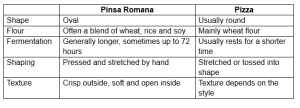
Pizza itself comes in many styles from region to region, so this comparison looks at pizza in general rather than any single type.
Pinsa Bianca and Pinsa Rossa Explained
On a pinsa menu, you will usually see the terms pinsa bianca and pinsa rossa, and this simply describes what goes on the base before the toppings are added.
Pinsa rossa means a red pinsa, made with a sauce of tomato as the base layer, much like a traditional pizza. It has that familiar tangy, slightly sweet flavour running through every bite, which makes it a comfortable choice if you want something that feels close to classic Italian cooking.
Pinsa bianca means a white pinsa, made with no tomato sauce at all. Instead, the toppings sit directly on the base along with cheese and other ingredients, which lets flavours like cured meats, mushrooms or fresh herbs come through a little more clearly, since there is no tomato in the mix to compete with them.
Neither one is better than the other; they are simply two different ways to enjoy the same base. It really just comes down to whether you feel like the warmth of a tomato base or something a little lighter, creamier and more delicate instead.
Is Pinsa Healthier Than Pizza?
People often ask this, and the honest answer is that it depends, rather than a simple yes.
Pinsa is not automatically healthier than pizza. Its nutritional profile depends on the dough itself, the portion size, the toppings, the cheese, and how much oil is used along the way. A pinsa loaded with rich meats and extra cheese will still be a hearty meal, no matter how light the base feels.
What is fair to say is that the long fermentation and the flour blend contribute to a lighter, airier texture, which is different from the denser bite of many pizza styles. That is a texture difference rather than a proven health benefit, so it is worth keeping that distinction in mind rather than assuming lighter automatically means better for you.
It is also worth knowing that pinsa is not gluten-free, since the dough still contains wheat flour. If you need to avoid gluten completely, this is worth checking before you order.
Taste Pinsa Romana at Compà, Mt Hawthorn
Now that you know what pinsa actually is, the best way to understand it properly is to try it for yourself.
At Compà in Mt Hawthorn, our pinsa menu is split into pinsa rossa and pinsa bianca, along with a few special combinations for anyone who wants to try something a little different. Pinsa is served as a half pala, which suits two people sharing, or a full pala, which comfortably serves three to four.
If you would like to try it in person, you can book a table with us. If you are planning a bigger group, our set menus also include a pinsa selection as part of the shared dishes.
Frequently Asked Questions
Is pinsa vegan or vegetarian friendly?
The base itself is generally made without dairy or eggs, so a plain pinsa dough is usually vegan friendly before any toppings go on. What ends up on top, from cheese to cured meats, is what actually decides whether the finished pinsa fits a vegan or vegetarian diet.
What does pinsa actually taste like?
Pinsa has a much lighter, more open bite than pizza, with a satisfying crunch around the edges and a soft, almost cloud like centre. The long fermentation also gives the base a subtle, slightly tangy depth of flavour that a quicker pizza dough simply does not have time to develop.
Is pinsa the same as focaccia?
Not quite, even though people mix the two up often. Focaccia is thicker, softer throughout, and usually enjoyed on its own or as a side, while pinsa is thinner, crisper at the edges, and built to carry toppings the way pizza does.
Is pinsa served as a starter or a main?
It genuinely works as either. A smaller pinsa suits a shared starter or a lighter bite, while a full sized pinsa is substantial enough to work as a complete main on its own.
Is the topping already cooked into the pinsa or added afterwards?
The base is usually part cooked on its own first, which sets that crisp outer edge, and the toppings are added afterwards before it goes back in to finish. This is part of why the crust stays crisp instead of turning soft under heavier toppings.