

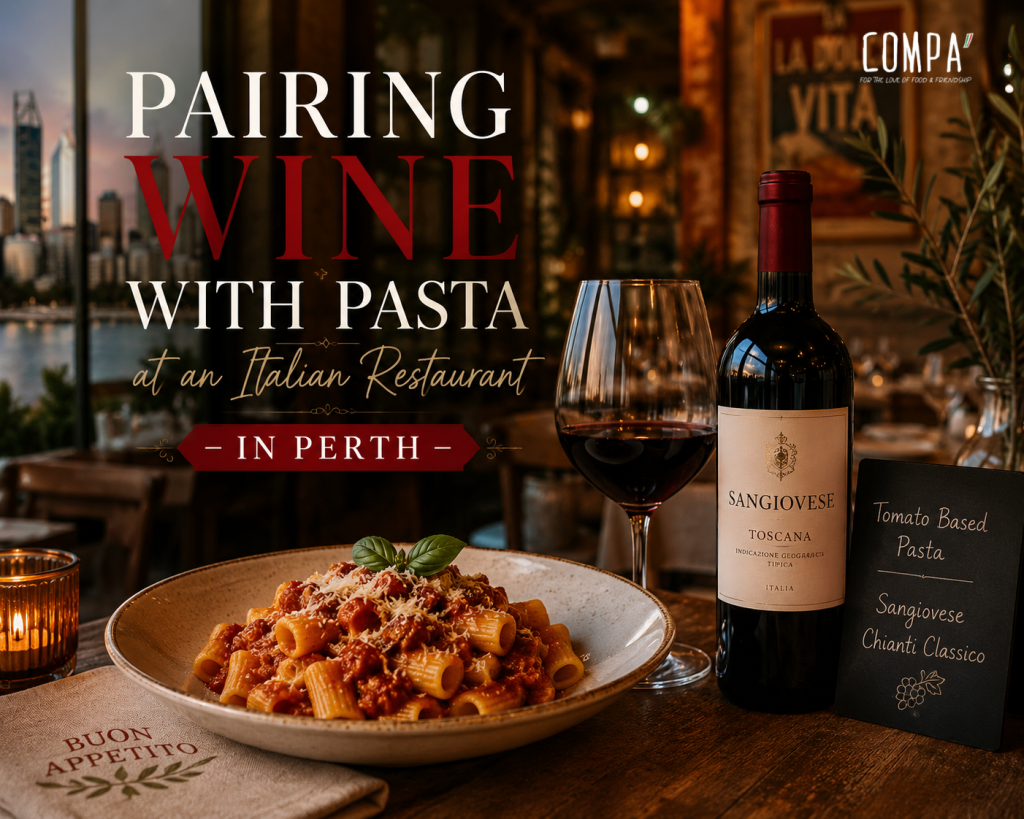
You’re seated at a warmly lit table. The menu is full of homemade pasta, and the wine list reads like a tour through Italy. Now comes the question every table asks: which wine goes with the pasta I’m about to order?
So, when pairing wine with pasta, follow the sauce, not the pasta shape. The sauce is where all the flavour lives; it’s what determines your wine.
But that’s only the beginning. At an Italian restaurant in Perth like Compà Mt Hawthorn, the menu goes far deeper than spaghetti bolognese. We’re talking ‘nduja, salsiccia calabrese, black-ink marinara, and slow-cooked lamb ragù – bold southern Italian flavours that open up an entirely different style of wine pairing.
This guide covers all of it. By the time you finish reading, you’ll know exactly which wine to pair with every pasta dish and why it works.
The Golden Rule of Pairing Wine with Pasta
The sauce determines the wine. Every time.
Pasta itself is a neutral canvas; it carries very little flavour on its own. What gives a dish its character is the sauce: its richness, acidity, spice, and weight. So, when you’re choosing a wine, you’re really pairing it with the sauce.
There are two ways a wine can work with a sauce:
- Complement: the wine mirrors the sauce’s character. A rich, earthy red deepens a meaty ragù.
- Contrast: The wine’s acidity cuts through the sauce’s richness. A crisp white slice through a creamy parmesan base.
Both approaches work. The key rule is this: the wine should always be at least as acidic as the sauce. A wine lower in acidity than the food will taste flat and dull against it.
One more thing worth knowing is that Italian wines were born alongside Italian food. Centuries of regional cooking and winemaking evolved side by side. When you’re eating Calabrian pasta, reaching for a Calabrian or Southern Italian wine is rarely a mistake.
Now, let’s get specific.
Red Wine with Pasta – When to Go Bold
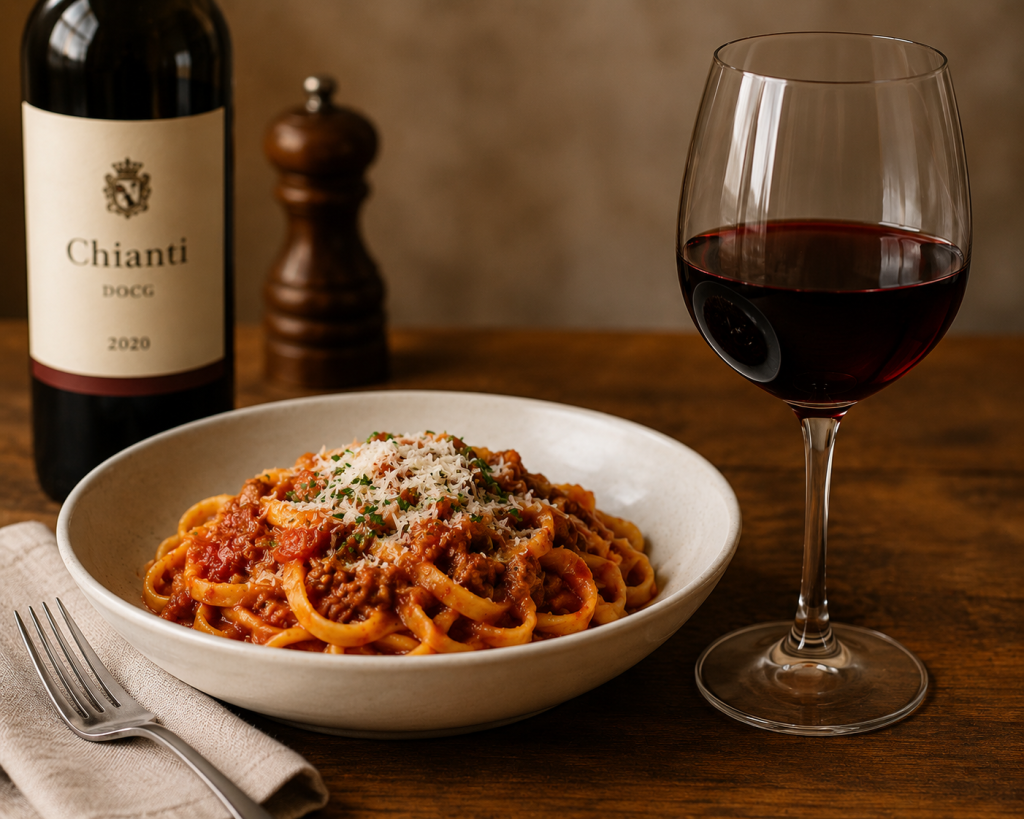
Bold sauces need bold wines. Here’s how to match Italy’s best red wines with the pasta dishes that deserve them.
Tomato-Based Pasta: Bolognese, Ragù, Napoletana
Tomatoes are naturally acidic. The wine pairing logic here is straightforward: match acidity with acidity. A high-acid red doesn’t fight the tomato; it harmonises with it.
The classic choice is Chianti Classico (made from Sangiovese grapes in Tuscany). Its bright cherry flavour and firm acidity are built for tomato-based pasta.
Other excellent wines to pair with tomato-based pasta are:
- Montepulciano d’Abruzzo – medium-bodied, earthy, very food-friendly
- Barbera d’Asti – lower tannin, high acidity, works especially well with lighter meat sauces
- Margaret River Cabernet Sauvignon – for Perth diners, a local option that handles the richness of a slow-cooked ragù beautifully
At Compà, try these pairings with our spaghetti bolognese (homemade spaghetti with minced ragù) or the fettuccine al ragù d’agnello (slow-cooked diced lamb in tomato sauce).
Spicy ‘Nduja Pasta
Nduja is Calabria’s gift to the world. A soft, spreadable, intensely spiced fermented pork salumi loaded with Calabrian chilli. In pasta, it dissolves into the sauce, coating every strand with deep, smoky heat.
The challenge with spicy food and wine is that high-tannin reds amplify heat. A heavily tannic Barolo next to an ‘nduja pasta dish will leave your mouth burning. Instead, choose a medium-bodied red with soft tannins and a touch of ripe fruit. The fruit sweetness soothes the heat, and the softer structure doesn’t clash.
Best wine choices:
- Primitivo – the same grape as Zinfandel, but softer and more savoury in Italian form
- Nero d’Avola – a Sicilian red with dark fruit and a gentle finish
- Cerasuolo di Vittoria – a rare Sicilian blend, light enough to handle spice without disappearing
This is the pairing for our Casarecce Calabrese; traditional homemade pasta with slow-cooked tomato sauce, pork belly, and ‘nduja.
Meat and Salsiccia Pasta
When the sauce is built around salsiccia (Italian sausage) or porcini mushrooms in a rich, creamy base, you need a wine with real structure — enough body to match the weight of the dish.
Best wine pairings:
- Aglianico – the great red grape of Southern Italy; tannic, earthy, built for meat
- Sagrantino – powerful Umbrian red, exceptional with pork-based dishes
- Nebbiolo / Barolo – for special occasions, the depth and length of a good Barolo elevates a rich pasta to something memorable
Perfect for our Bucatini Calabria: homemade bucatini with porcini mushrooms and salsiccia in a creamy parmigiana sauce.
White Wine with Pasta – When to Stay Light
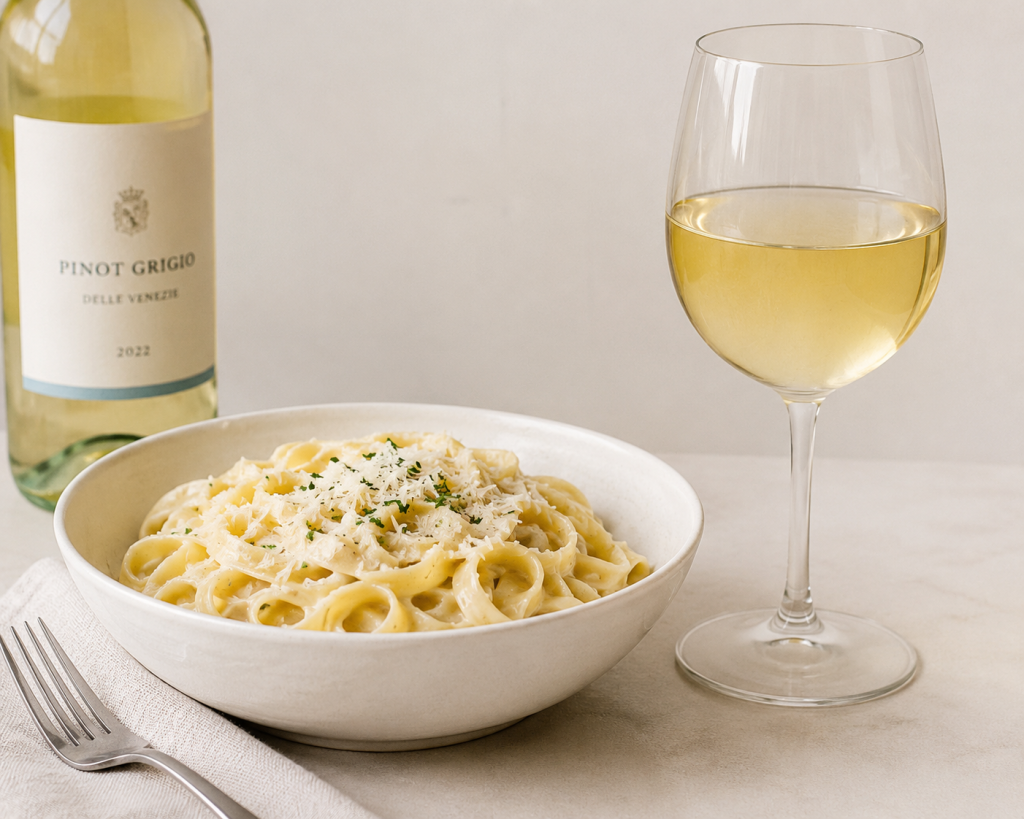
Not every pasta calls for red. Some dishes need a wine that’s crisp, mineral, and refreshing – one that lifts the flavours rather than weighing them down.
Seafood Pasta
The rule here is simple: lean, acid-driven white wines echo the freshness of the sea. High-tannin reds actively clash with seafood. The combination produces a metallic, bitter aftertaste. Avoid them.
Best white wines to pair with seafood pasta:
- Pinot Grigio – the standard-bearer for seafood pasta; clean acidity, light body
- Vermentino – coastal and herbaceous, excellent with prawns and squid
- Verdicchio – mineral and saline, natural partner for crab and shellfish
- Lugana – elegant northern Italian white, brilliant with delicate seafood
- Unoaked WA Chardonnay – a Perth-local option with the freshness seafood pasta needs
These whites shine alongside our Gnocchi Gamberi & Zucchine (prawns and zucchini in a Chardonnay and cherry tomato sauce), Fettuccine al Granchio (crab in white wine tomato sauce), and Spaghetti Neri alla Marinara, our black ink pasta with clams, mussels, squid, prawns, and crab.
Creamy and Cheesy Pasta
Rich, creamy sauces coat the palate. What you need is a wine that cuts through that fat with clean acidity, not one that adds more weight.
Best wines to pair with creamy cheese pasta:
- Lightly oaked Chardonnay – the buttery texture mirrors the cream, and the acidity cuts through it
- Ribolla Gialla – a northeastern Italian white with bright acidity and textural interest
- Pinot Grigio – lighter touch; works when the cream sauce is delicate rather than heavy
The ideal pairing for our Bucatini Calabria, where the creamy parmesan sauce is the centrepiece.
Vegetarian Pasta
Light, herbaceous whites bring out the best in vegetable-forward pasta. The acidity highlights freshness in the same way a squeeze of lemon brightens a salad.
Best wines to pair with vegetarian pasta:
- Soave (Garganega grape) – floral, light, made for gentle pasta
- Greco di Tufo – from Campania; mineral, slightly bitter, excellent with aubergine
- Falanghina – fresh and herbaceous, natural match for basil-based sauces
- Sauvignon Blanc – for greens-forward pasta, the herbaceous character is a perfect echo
Try these with our Ravioli Napoletana (homemade ricotta and spinach ravioli with napoletana sauce) or Fusilli Siciliana (fried eggplant, fresh basil, and salted ricotta).
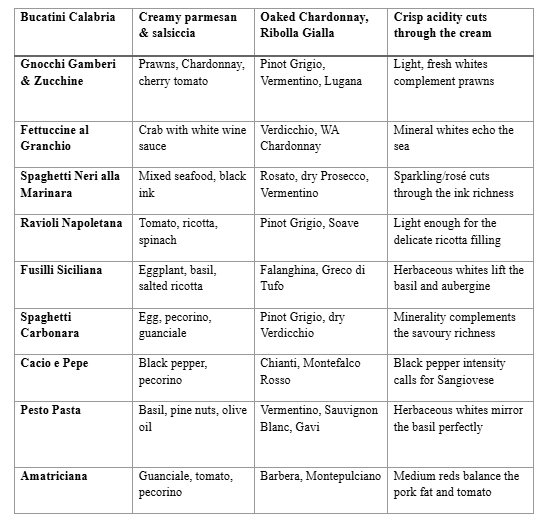
Wine and Pasta Pairing: At a Glance
Use this table when you’re at the table and need a quick answer. It covers Compà’s pasta menu alongside universally popular dishes. Bookmark it for your next Italian dinner in Perth.
Calabrian Wine and Pasta: A Pairing Perspective from Southern Italy
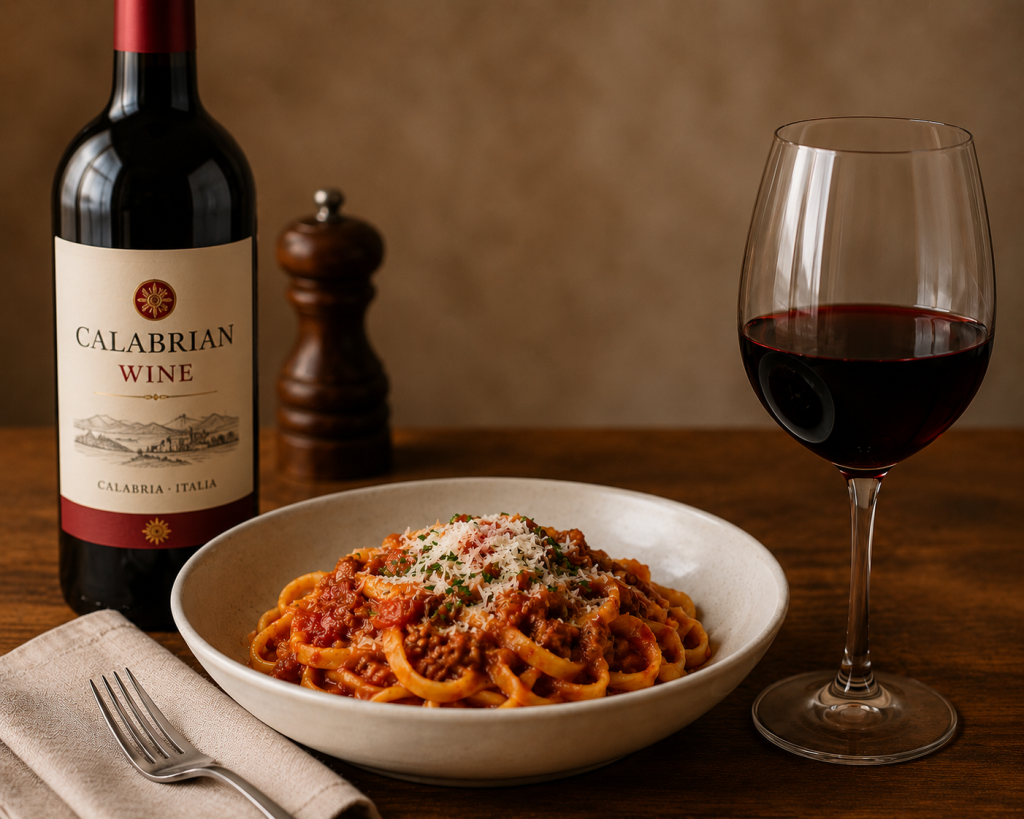
Most wine pairing guides stop at Chianti and Pinot Grigio. If you’re eating Calabrian food, that’s not enough.
Calabria sits at the very toe of Italy’s boot, an isolated, rugged region shaped by fierce sun, volcanic soil, and centuries of self-sufficiency. The food here is intense: abundant chilli, cured pork in every form, fresh coastal seafood, and sharp aged cheeses. It’s not subtle cuisine, and it doesn’t pair with subtle wine.
The indigenous Calabrian grapes to know:
- Gaglioppo – the backbone of Cirò, Calabria’s most famous red. Earthy, rustic, medium-tannin, and genuinely delicious with pork-based pasta
- Greco Bianco – a crisp, lightly bitter white that works beautifully alongside seafood dishes and lighter pasta
- Magliocco – a bold, full-bodied red built for the region’s most flavour-intensive dishes
The principle of “what grows together goes together” is nowhere more true than in Calabria. The food and wine evolved together across the same soil and under the same climate.
A Cirò Rosso with a bowl of Casarecce Calabrese isn’t just a pairing; it’s the way this food was always meant to be eaten.
At Compà Mt Hawthorn, Chef Egidio’s menu is rooted in this tradition. The ‘nduja, the salsiccia calabrese, and the slow-cooked ragù – these dishes carry the DNA of Calabrian cooking. When you order them with a Southern Italian red, you’re not just pairing food and wine. You’re experiencing a region.
Red or White Wine with Pasta? Here’s the quick answer.
This is the most common question at any Italian table, and the answer is It depends on the sauce.
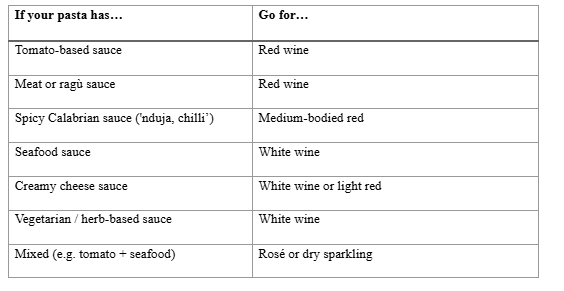
There’s no single “correct” answer. There’s only one wine that balances the weight and acidity of what’s on your plate. Get that right, and both the food and wine improve each other.
How to Choose Wine with Pasta at an Italian Restaurant in Perth
Choosing wine at a restaurant is different from choosing it at home. You’re working with a curated list; you can’t taste before you buy, and you may not know every wine on the page.
A few practical tips:
- Ask the staff: At a good Italian restaurant in Perth, the front-of-house team knows the menu pairings. They’ve tasted the food. They know what’s on the list. One question like “What would you recommend with the casarecce?” is worth more than ten minutes of guessing.
- Use the sauce as your anchor: Even if you don’t recognise the wines on the list, you know the score. If it’s tomato and meat, you’re in red-wine territory. If it’s seafood or cream, you want white. Ask for something in that direction.
- Think about the table, not just your dish: If you’re sharing pasta at a long Italian lunch, the way it’s meant to be eaten, a bottle of medium-bodied red like a Montepulciano d’Abruzzo sits comfortably alongside both meat and vegetable pasta on the same table.
At Compà Mt Hawthorn, the wine list is built around chef Egidio’s Calabrian-inspired menu. Every dish on the menu has a pairing that works, and the team is always happy to guide you to it.
Next time you’re looking for Italian dining in Mount Hawthorn or across Perth, let the pasta guide your palate. And let us take care of the rest.
Common Wine and Pasta Pairing Mistakes to Avoid
Even with the best intentions, a few common mistakes can flatten what should be a great pairing. Here’s what to watch for:
Heavy Tannins with Delicate Pasta
Highly tannic reds (think big Shiraz or Barolo) overwhelm light pasta dishes. A delicate ricotta ravioli with Napoletana sauce doesn’t need that weight; it needs a lighter touch.
Sweet Wines with Rich, Savoury Sauces
Off-dry or sweet wines clash with savoury, umami-rich sauces. Nduja pasta paired with a sweet rosé will taste muddy and out of balance. Stay dry.
Ignoring Sauce Intensity
A bold, heavily spiced Calabrian sauce will make a delicate Pinot Grigio disappear. Match the intensity of the sauce with an equally pleasant wine.
Choosing by Pasta Shape Alone
“I’ll have the spaghetti, so I should choose a lighter wine.” This logic doesn’t work. The shape doesn’t determine the pairing. The Bucatini Calabria at Compà is a pasta dish that demands a bold red. The spaghetti marinara needs a crisp white. Shape is irrelevant. Sauce is everything.
Best Wine with Pasta for Any Occasion
Date Night Pairings
For a date at Compà, lean into single-bottle pairings that work across the menu. A Nebbiolo or Barbera handles most pasta dishes without dominating the conversation. If you’re going for seafood, a glass of Vermentino is quietly impressive without being intimidating.
Family-Style Shared Dining
When pasta is being shared around the table, go for crowd-friendly, mid-weight options like Montepulciano d’Abruzzo for reds or a good Pinot Grigio or house white for seafood and vegetables. These wines flex across multiple dishes without clashing.
Set Menu and Function Dining
At Compà’s set menus (Standard, Classic, and Premium), the kitchen sends out a journey across pasta, mains, and tapas. A medium-bodied Italian red, something like a Primitivo or Cirò, moves comfortably through the whole menu.
For larger functions at Salute, our dedicated function centre, the team can match wines course by course.
Three Things to Remember
Great wine with pasta comes down to three rules:
- Follow the sauce: always pair by sauce style, not pasta shape
- Balance the acidity: your wine should be at least as acidic as the dish
- Trust Italian with Italian: centuries of evolution don’t lie
Still Not Sure What to Order Tonight?
Let Compà’s team take the guesswork out of it.
Experience Italian Wine with Pasta the Calabrian Way in Perth
At Compà Mt Hawthorn, every pasta on the menu was crafted with a wine pairing in mind. Chef Egidio’s Calabrian-inspired kitchen uses homemade pasta, traditional Southern Italian techniques, and the finest local and Italian ingredients. Our team is always happy to help you find the perfect glass to match.
Whether you’re planning a date night, a long Sunday lunch with the family, or a private function for a special occasion, the table is set and the wine list is ready.
FAQs
1. What wine goes best with pasta?
The best wine for pasta depends entirely on the sauce. Tomato-based pasta pairs best with medium-bodied, high-acid reds, like Chianti or Sangiovese. Creamy pasta suits a lightly oaked Chardonnay or Pinot Grigio. Seafood pasta calls for crisp, mineral whites like Vermentino or Verdicchio. Match the wine’s weight and acidity to the sauce, and you won’t go wrong.
2. Should I drink red or white wine with pasta?
Red wine works best with tomato, meat, and spicy pasta sauces. White wine is the better choice for seafood, vegetarian, and cream-based pasta dishes. Both can work beautifully. What matters is that the wine’s acidity and weight are in balance with the sauce, not that it’s red or white.
3. What Italian wine goes with Bolognese pasta?
Chianti Classico is the classic choice. Its high acidity and bright cherry character are made for tomato and meat. Montepulciano d’Abruzzo and Barbera are excellent, more affordable alternatives. For Perth diners, a Margaret River Cabernet Sauvignon brings enough structure and depth to handle a rich slow-cooked ragù beautifully.
4. What wine pairs with spicy pasta or ‘nduja?
Avoid high-tannin reds. Tannin amplifies heat and makes spicy food more intense. Instead, choose a soft, medium-bodied red with ripe fruit and low tannins: Primitivo (the Italian version of Zinfandel) or Nero d’Avola from Sicily are both excellent.
5. What wine goes with seafood pasta in Perth?
The best wines for seafood pasta are crisp, mineral whites. Pinot Grigio, Vermentino, and Verdicchio are all reliable choices. In Perth, an unoaked WA Chardonnay is a brilliant local option. It has the freshness and acidity to lift seafood flavours without overpowering them.